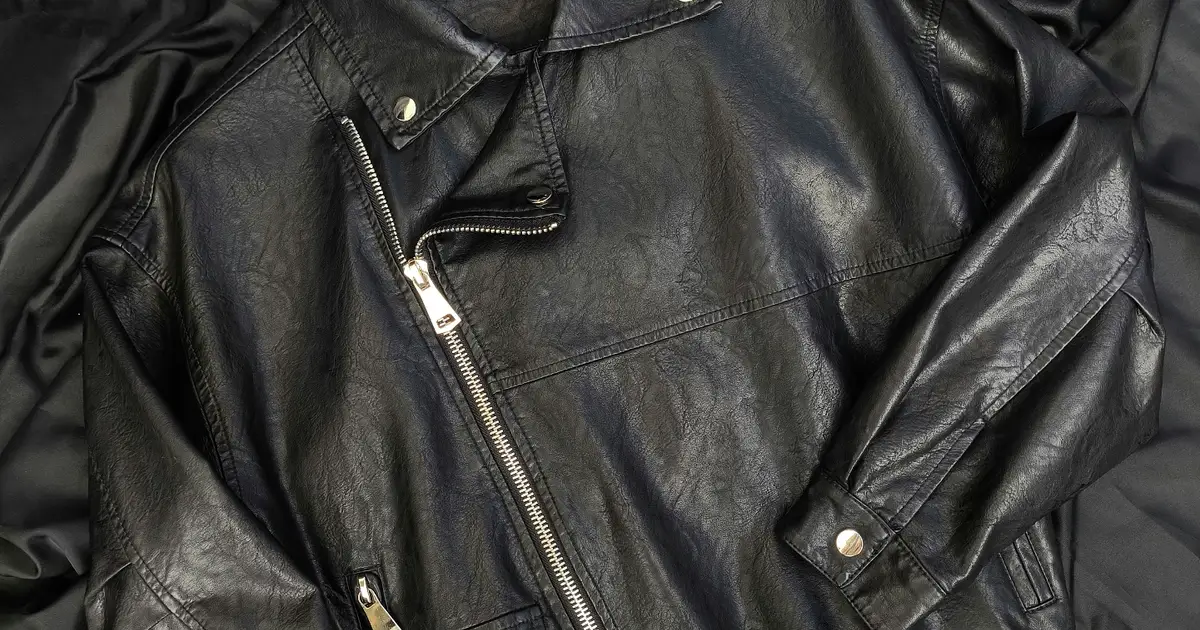
Under the elevated tracks at Nollendorfplatz, every Easter, a market goes up unlike any other in the city. Stalls of worked leather, straps, studs, beer stands, speakers pushing techno from early afternoon. Whoever walks past by chance takes it for some festival or other. Whoever knows, recognises Europe's oldest gathering in gay fetish culture — this year reaching its fifty-third edition, held from late March into early April 2026, just as it has every Easter since 1972.
A gathering born without a single club behind it
In 1972, Berlin didn't yet have a single club dedicated to this. The Ostertreffen — the “Easter meeting” — happened anyway, organised privately by a group of people with no official structure. The spark came from outside: New York's Cycle MC, one of the most influential leather clubs in the world at the time, had inspired similar clubs to form across Europe — Amsterdam, Munich, London. In the friendly rivalry between these new scenes to claim a fixed date on the international calendar, Berlin secured Easter weekend. From there, the gathering never stopped.
In 1973 the first club took over running it officially, MSC Berlin, which led the event for over twenty years until its dissolution in 1997. The following year, on 16 April 1998, a new group of people founded Berlin Leder und Fetisch e.V. — the BLF — which has carried the tradition forward ever since.
From local meetup to international pilgrimage
The jump in scale came in 2013, when the BLF gave the event a new visual identity, pushing the name Easter Berlin increasingly into the international spotlight. From there, growth was steady, interrupted only by the pandemic — the 2020 edition cancelled at short notice, 2021 moved online. In 2023 the event passed its fiftieth edition, the same year the BLF marked its own twenty-fifth anniversary. For the occasion, the open-air festival under the tracks at Nollendorfplatz was born, and has been a fixture ever since.
Over one week, the programme now counts more than sixty parties, receptions, and side events: from a boat tour on the Spree organised with international clubs, to the “Puppy Walking” tour on Easter Sunday, to evenings blending live classical music with leather and latex outfits inside a Berlin church — a pairing that should clash, and works precisely because it does.
An aesthetic that has always let itself be crossed
What's changed most over fifty years isn't the weekend itself but the visual vocabulary of the community that inhabits it. Leather remains the founding code, but the last twenty years added rubber and “skin,” then sportswear — and, in the last five or six years, puppy play, with its own masks and rituals. A scene that rarely stiffens with age: it absorbs new vocabularies without discarding the old ones.
Why it matters beyond the leather scene
Easter Berlin isn't a mass-media event, and doesn't need to be one to matter. It's proof that a tradition born with no official structure, kept alive for decades by a few dozen club members, can become one of the most recognised gatherings in Europe within its field — without compromising its identity, without needing to normalise itself to grow. Berlin didn't invent leather culture. It simply gave it a fixed date on the calendar, and never took it away again.
Readers interested in the wider aesthetic of Berlin's club culture will also find The Dress Code Myth and Berlin's Districts After Dark worth a look.
Closing
Every year, under the same tracks, the same techno arrives, the same smell of leather wet with April rain. Fifty years after a first meeting organised by no one in particular, that weekend still proves the same thing: the sturdiest traditions are rarely the ones planned on a drawing board. They're the ones someone simply shows up for again, every year.